
The United States brings decades of experience regulating complex offshore industries, supported by scientific institutions, engineering expertise, maritime safety standards, and a culture of continuous improvement.
America’s offshore energy industry operates under rigorous regulatory requirements, with environmental monitoring, independent oversight, and enforceable permit conditions. That experience provides a foundation for applying proven safety practices, scientific research, and operational discipline to ocean mineral development.
That provides a strong foundation for a new ocean industry: establish the baseline, measure performance, apply rigorous standards, and use better science and technology to keep improving.
More Than 50 Years of Deep-Ocean Science
Deep Sea Datasets

Ocean mineral science and engineering have developed together for decades.
Between 1976 and 1979, four U.S.-based consortia demonstrated nodule collection technologies through multiple in-field trials at depths of several thousand meters in the Clarion-Clipperton Zone of the Pacific Ocean.
At the same time, NOAA launched its Deep Ocean Mining Environmental Study (DOMES) program, conducting research from 1975 to 1980 to establish environmental baselines and study the effects of deep-ocean mineral collection. The DOMES program, together with NOAA’s subsequent programmatic environmental review, established an early scientific and regulatory foundation for evaluating deep-ocean mineral development.
Those pioneering programs helped establish a scientific foundation that researchers continue to build upon today.
Over more than five decades, deep-ocean environmental research has included hundreds of research expeditions and an estimated 9,000+ days at sea.
That investment has produced an extensive body of research on deep-ocean biodiversity, sediment conditions, oceanography, and mineral collection technologies. Today’s exploration programs continue adding higher-resolution data and new observations to that scientific record.
From Baseline to Real-Time Monitoring
Before collection begins, environmental baseline studies can map the seafloor, characterize biological communities, measure oceanographic conditions, study sediments, and document existing conditions.
These surveys establish a detailed picture of conditions before operations begin, providing the information needed to evaluate environmental performance and guide project planning.
During operations, AUVs, ROVs, landers, moorings, cameras, sensors, and surface vessels can monitor environmental conditions and operational performance.
The data can then inform how equipment is operated and how practices evolve.
Modern monitoring systems can track sediment movement, water-column conditions, and operational performance in real time. This information supports adaptive management, allowing operators and regulators to evaluate conditions and make adjustments based on measured results.
This approach, often described as adaptive management, uses monitoring results to evaluate performance and inform operational adjustments. Its effectiveness depends on clear environmental requirements, reliable measurements, and the ability to respond when conditions differ from expectations.
During DEME’s 2021 Patania II technology trial, researchers deployed roughly 200 instruments across 43 platforms to monitor the collection test.
During The Metals Company’s 2022 pilot collection trial, independent researchers monitored an integrated deep-sea collection system in real time, adding another major body of empirical data to the scientific record.
These trials demonstrate how environmental research and equipment testing can advance together, generating operational data that helps inform future technology development and regulatory review.
Biodiversity & Habitat
Understanding biodiversity begins before development. Environmental baseline programs use high-resolution imagery, genetic analysis, physical sampling, autonomous vehicles, and other scientific tools to document species, habitats, and biological communities across potential operating areas.
That information helps establish pre-development conditions, identify environmental characteristics that should inform project design, and create benchmarks against which future observations can be compared.
Deep-ocean ecosystems vary considerably by location. Abyssal plains, seamounts, and hydrothermal environments support different biological communities, and the potential effects of mineral activities must be evaluated in the context of each setting.
Long-term research adds another dimension. Scientists have returned to historic disturbance sites decades after early collection trials, documenting evidence of recovery in some biological communities, alongside persistent changes in others, while continuing to study longer-lasting changes.
A 2025 study by researchers from the Natural History Museum in London and MIT revisited a collection test site 44 years after disturbance by first-generation equipment. Researchers documented recovery of microscopic organisms in the collector tracks and areas affected by sediment deposition. The findings add to a growing body of research examining how deep-ocean ecosystems respond over time and how collection technology influences environmental outcomes.
Deeper Waters, Operational Separation
Many polymetallic nodule resources occur 4,000 meters or more beneath the surface, creating substantial vertical separation between seafloor operations and most commercial fishing activity.
Modern project design can reinforce that separation through operating practices, vessel coordination, monitoring, and management of water-column activities.
Advances in collection technology, sediment management, and environmental monitoring provide additional tools for designing operations that account for other ocean users.
Scientific monitoring can track conditions at depth and throughout the water column, providing data to inform operations and interactions with other ocean users.
Safety Starts at the Beginning
Responsible development also means protecting the people who work offshore.
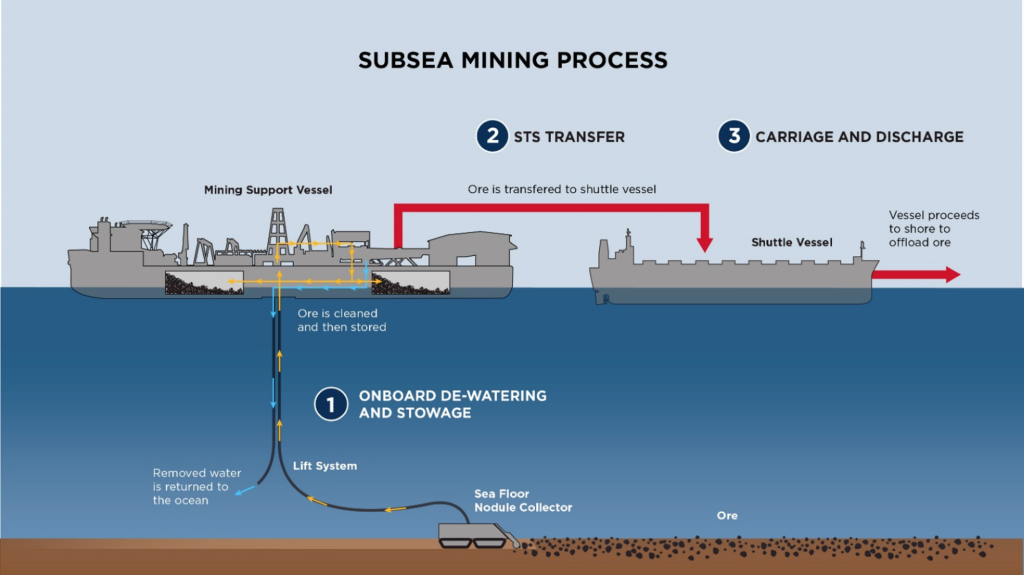
Ocean mineral operations combine vessels, crews, lifting systems, subsea equipment, power systems, heavy machinery, and complex interfaces between surface and subsea operations. Managing those risks begins with how vessels and equipment are designed.
Classification organizations such as ABS bring decades of maritime and offshore experience to vessel and system design, engineering review, testing, certification, and operational standards.
That experience is particularly valuable as companies integrate new mineral collection technologies with established marine systems. Classification, engineering review, and risk assessment can help establish safety requirements early in the design process, before vessels and equipment enter service.
The objective is to identify and manage risks before equipment ever reaches the water.
What Allies Are Already Building
Spotlight: The EMINENT Project
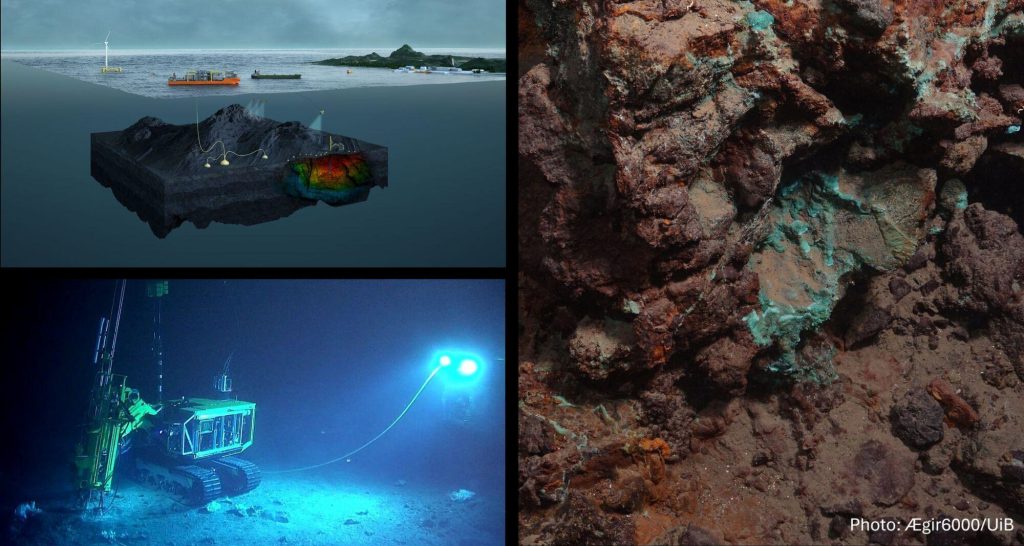
Responsible ocean mineral development is also becoming an international engineering and research effort.
The EMINENT project brings together allied expertise to advance technologies and knowledge for ocean mineral operations. Work underway among partner nations demonstrates how engineering, environmental research, monitoring, and operational experience can advance together.
By bringing together specialized engineering capabilities and research institutions, projects like EMINENT can help advance equipment development, environmental monitoring, and the technical knowledge needed for future offshore operations.
For the United States, allied projects provide another opportunity: share knowledge, accelerate learning, and help establish high standards across an emerging industry.
Learn more about the Eminent Project
Spotlight: How Moana Minerals Works with the Cook Islands
The Cook Islands provides an example of how ocean mineral exploration can develop alongside local institutions and community engagement.
Moana Minerals operates within the Cook Islands’ domestic regulatory framework while conducting exploration and environmental research and engaging with government, communities, and other local stakeholders.
The Cook Islands has established a domestic framework for seabed mineral exploration, providing an example of how host governments can establish requirements for research, licensing, and oversight while engaging with companies interested in developing offshore resources.
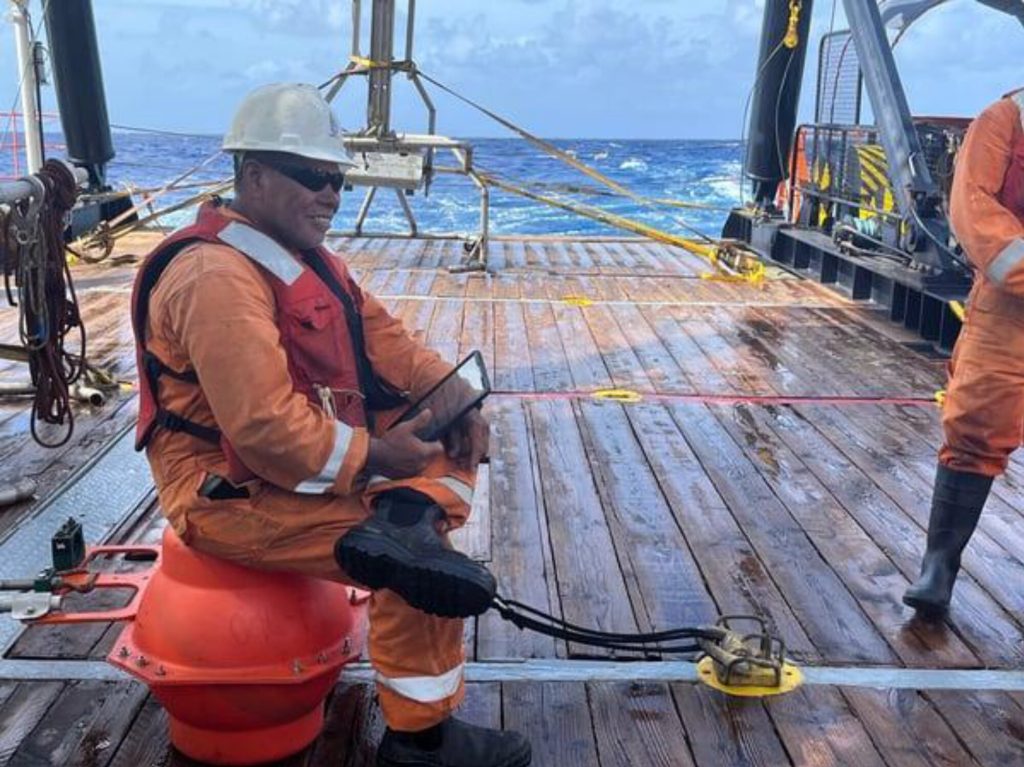
The experience demonstrates that host-country relationships are not an afterthought to ocean mineral development. They can be built into the exploration process from the beginning.
Responsible development means understanding the resource, the environment, and the communities connected to it.
What Ocean Mineral Research Has Taught Us About the Deep Ocean
Ocean mineral exploration has done more than identify mineral resources. It has helped build much of the scientific record used to understand some of the least-explored environments on Earth.
For decades, private investment in seabed minerals has supported deep-ocean biological surveys, geological mapping, environmental monitoring, and technology development — generating data that increasingly extends well beyond the industry itself.
Research supported by ocean mineral exploration has contributed to publicly accessible scientific databases, advanced understanding of deep-ocean biodiversity, and provided opportunities to test environmental models against measurements collected during actual offshore operations.
What that investment has helped make possible:
- A much larger deep-ocean dataset. The Ocean Biodiversity Information System now provides open access to more than 125 million observations across nearly 200,000 species. The International Seabed Authority’s DeepData repository contains more than 10 terabytes of environmental data, much of it generated through private-company research cruises, and has supported more than 160 scientific publications.
- Real-world testing of environmental assumptions. Field trials allow scientists to replace models and hypotheses with measurements from actual operations. MIT researchers studying conventional collection found sediment disturbance was one-third to one-sixth of some earlier estimates, while observed plumes remained much closer to the seafloor than some predictions had anticipated.
- Environmental monitoring at unprecedented scale. During a single 2021 collection trial, independent scientists deployed roughly 200 instruments across 43 platforms to measure conditions before, during, and after the test. Modern trials can effectively become large-scale deep-ocean research campaigns in their own right.
- A new generation of non-destructive ocean observation. Autonomous underwater vehicles can travel long distances at extreme depths while using cameras, sensors, sonar, and other instruments to document species, habitats, and geology. That expands the geographic and temporal reach of deep-ocean research without relying exclusively on traditional physical sampling methods such as trawling.
Together, these advances demonstrate how investment in ocean mineral exploration can generate scientific knowledge with applications far beyond mineral development itself.
From Collection Technology to Scientific Tools
The technologies needed for increasingly precise ocean mineral operations can also expand what scientists are able to observe.
Selective collection systems require sophisticated cameras, sensors, autonomous navigation, machine vision, and detailed knowledge of the seafloor. As those systems operate, they can generate new information about species, habitats, sediment conditions, and seafloor geology.
Autonomous survey systems can operate over long distances and at extreme depths, expanding the geographic reach of deep-ocean observation. The same imaging and sensing technologies used to identify mineral resources can also contribute valuable information about biological communities and environmental conditions.
That creates an important feedback loop:
Better science → better technology → more data → better understanding
The same advances that make more precise collection possible can also make deep-ocean research more extensive, more continuous, and less reliant on intrusive sampling.
Continued investment in these technologies can strengthen both America’s oceanographic research capabilities and the scientific foundation supporting future ocean mineral development.